
Uganda is often called the Pearl of Africa, and for good reason. From the misty mountain gorilla treks through Bwindi Impenetrable Forest to the vibrant, fast-moving streets of Kampala, this East African gem demands more from your wardrobe than almost any other destination on the continent. Get your packing wrong and you'll be cold, muddy, and underdressed in all the wrong places. Get it right, and you'll move seamlessly between jungle trails and rooftop bars without missing a beat.
Here's everything you need to know.
Understanding Uganda's Climate Zones
Before you throw anything into a bag, understand that Uganda is not one climate — it's many. The country straddles the equator, but altitude changes everything. Kampala sits at around 1,200 metres above sea level, meaning evenings can be surprisingly cool. Bwindi, where you'll track gorillas, sits between 1,400 and 2,600 metres — it can be genuinely cold and is almost always damp. Kidepo Valley in the north bakes in dry savannah heat. Queen Elizabeth and Murchison Falls national parks sit lower and feel more tropically warm.
The two main rainy seasons run from March to May and October to November, but "dry season" in Uganda rarely means completely dry. Rain can fall any time of year, particularly in the southwest. Pack for layers and moisture — always.
The Safari Wardrobe
Colours Matter
Stick to earthy, neutral tones: olive, khaki, tan, brown, and muted greens. Avoid bright colours, which can startle wildlife, and stay away from blue — tsetse flies are attracted to it. Black absorbs heat and shows every speck of dust. Camouflage patterns are actually illegal in several East African countries, Uganda included, so leave those at home.
The Gorilla Trek Essentials
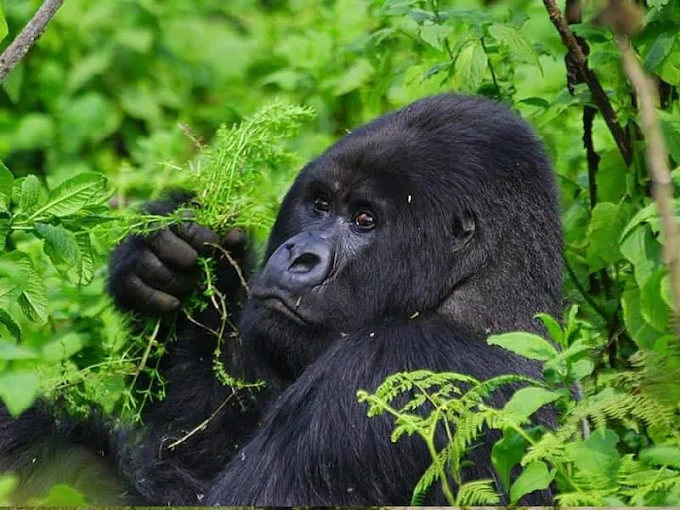
Gorilla trekking is the centrepiece of most Uganda itineraries, and it is physically demanding. The forest floor is wet and rooted, the trails are steep, and you may hike for four to eight hours through dense vegetation.
Long-sleeved shirts are essential — wear two light layers rather than one thick one. This protects against both the cold and stinging plants. Waterproof, breathable hiking trousers with a flexible waist will serve you far better than jeans, which become heavy and uncomfortable when wet. Gaiters are worth every penny — they keep mud, insects, and debris out of your boots on the forest floor.
Your hiking boots must be sturdy, waterproof, and broken in before you arrive. This is non-negotiable. Blisters on a gorilla trek are miserable and entirely preventable. Add a pair of lightweight camp shoes or sandals for evenings at the lodge.
Gloves — thin gardening gloves, specifically — are a safari insider's trick. The vegetation in Bwindi grabs and scratches, and grabbing roots and branches for balance is part of the trek. They also protect against safari ants.
Pack a packable rain jacket that compresses into its own pocket. In the forest, a sudden downpour is not a question of if, but when.
Game Drive Clothing
For open-vehicle game drives across savannah parks like Murchison Falls or Queen Elizabeth national park, the formula is simpler. Breathable long-sleeved shirts protect from sun exposure during the hours you'll spend watching elephants and hippos. Bring a light fleece or softshell jacket — early morning game drives begin before sunrise and the wind chill on a moving vehicle at altitude is sharper than expected.
A wide-brimmed hat is non-negotiable for sun protection. Add UV-protective sunglasses and you've covered the basics.
The City Wardrobe: Kampala and Beyond
Kampala is a modern, energetic city with a range of social environments — from casual local markets and street food spots to upscale restaurants, international hotels, and lively nightlife. Ugandans dress conservatively overall, and modest dress is particularly important when visiting religious sites, rural communities, or local markets.
What Works in the City
Lightweight chinos or smart trousers in neutral tones work everywhere. For women, midi skirts, linen trousers, or loose tailored dresses are comfortable in the heat and appropriate across settings. Shoulders covered and knees covered is a safe baseline, especially outside of tourist areas.
Cotton or linen shirts breathe well in Kampala's warmth and read as put-together. Avoid anything too tight or revealing in markets and local neighbourhoods.
For footwear, comfortable walking sandals with back straps or leather sneakers handle Kampala's uneven streets and occasional puddles. Flip flops alone will tire your feet quickly in a city that rewards walking.
A lightweight scarf or wrap is one of the most versatile items you can bring — it works as a modesty layer at temples and mosques, a sun shield, a blanket on cold bus journeys, and a bag liner in a downpour.
The Non-Negotiables: Gear That Goes Everywhere
- Daypack (20–25L): Carries water, snacks, a camera, and your layers throughout the day.
- Reusable water bottle with filter: Tap water safety varies. A filter bottle or purification tablets give you flexibility.
- Headlamp: Power cuts happen. Forest lodges get very dark.
- Insect repellent (DEET-based): Malaria is present in Uganda. Cover up at dusk and dawn and apply repellent consistently.
- Dry bags or ziplock bags: Keep electronics and documents dry across all environments.
- Quick-dry towel: Lighter than a standard towel and invaluable in budget lodges or after a sweaty trek.
How Many of Each Item?
Uganda's lodges generally offer laundry services, sometimes within 24 hours. You do not need to pack for every single day. A workable baseline for a two-week trip:
- 3–4 long-sleeved safari shirts
- 2 pairs of hiking/safari trousers
- 1–2 pairs of smart casual trousers or a dress/skirt for the city
- 5–6 lightweight base-layer t-shirts (some will double as sleepwear)
- 1 fleece or mid-layer
- 1 packable waterproof jacket
- 1 pair of waterproof hiking boots
- 1 pair of walking sandals or smart casual shoes
- 6–7 pairs of moisture-wicking socks and underwear
A Final Word
The temptation when packing for a multi-environment trip is to overpack. Resist it. Uganda's roads can be rough, you may move lodges frequently, and a heavy bag becomes a burden quickly. Everything on this list earns its weight. Focus on versatility, layers, and waterproofing — and leave room for a few pieces from Kampala's excellent craft markets. The kitenge fabric alone is worth the luggage space.
Pack smart, travel light, and enjoy one of Africa's most extraordinary destinations.
Are you planning to have a tour in Uganda here at Uganda Tourist Guide we are more than ready to guide you through. Contact us at info@ugandatouristguide.com or call us now on +2563932911059/+18182906623