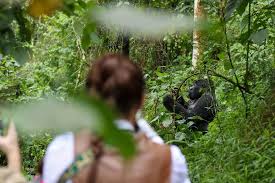
There are fewer than 1,060 mountain gorillas left on Earth. Uganda is home to roughly half of them. Coming face to face with these animals in the dense highland forests of the country's southwest is one of those rare wildlife experiences that genuinely exceeds expectation — no photograph, no documentary, no secondhand account prepares you for the moment a silverback looks up from the undergrowth and holds your gaze. It is, without exaggeration, one of the most extraordinary things a traveller can do.
For 2026, Uganda remains the most accessible and best-value gorilla trekking destination in the world. Permits are priced well below Rwanda, the parks are in excellent condition, and a growing network of lodges caters to everyone from budget backpackers to luxury safari travellers. Here is everything you need to plan your trip.
Where to Trek: Bwindi vs. Mgahinga
Uganda has two gorilla trekking parks, both in the mountainous southwest. Bwindi Impenetrable National Park is the dominant choice. A UNESCO World Heritage Site, it shelters over 400 mountain gorillas across four trekking sectors — Buhoma in the north, Ruhija in the east, and Rushaga and Nkuringo in the south. With 17 habituated gorilla families available to visitors, Bwindi offers more permit availability and scheduling flexibility than anywhere else in the world. The forest itself, ancient and stratified, is home to 90 mammal species and 11 primate groups, making it a destination entirely on its own terms.
Mgahinga Gorilla National Park, tucked into the Virunga Volcanoes where Uganda meets Rwanda and the DRC, hosts a single habituated family — the Nyakagezi group — against a backdrop of three volcanic peaks: Mount Muhavura (4,127m), Mount Gahinga (3,474m), and Mount Sabinyo (3,645m). The landscape is more dramatic than Bwindi, but permit availability is far more limited. Mgahinga suits travellers who want a quieter, more intimate experience and have genuine flexibility on dates.
For first-time visitors, Bwindi is the clear recommendation.
Permit Costs in 2026
Gorilla trekking permits are issued by the Uganda Wildlife Authority (UWA) and priced by residency category. Current rates, valid through June 2026, are as follows: foreign non-residents pay $800, foreign residents of East Africa pay $700, other African passport holders pay $500, and East African citizens pay approximately $50. A standard permit covers park entry, a trained ranger guide, advance trackers, and exactly one hour with a habituated gorilla family.
Of the $800 fee, 75% goes directly toward conserving the surviving gorilla population, 15% is retained by the government, and 10% goes to local communities around the parks. It is one of the more transparent and effective wildlife tourism funding models anywhere in Africa. Bwindi
For those who want more time with the gorillas, Uganda offers the Gorilla Habituation Experience (GHE), available exclusively in Bwindi's Rushaga sector. This premium encounter allows you to spend four full hours with a semi-habituated gorilla family alongside researchers and rangers, observing feeding patterns, social dynamics, and family hierarchies that a standard one-hour visit simply cannot reveal. The cost is $1,500 per person for foreign non-residents. It is rarer and significantly more immersive than the standard trek, and for serious wildlife enthusiasts, it is frequently described as the more powerful of the two experiences. Ugandasafaribookings
One valuable but underreported saving: during the low-season months of April, May, and November, the Uganda Wildlife Authority offers a discounted permit rate of $600 — a saving of $200 on the standard price. Duma Explorer
Best Time to Go
Gorilla trekking is possible every month of the year. The mountain gorillas do not migrate, and habituated families are tracked daily by advance scouts regardless of weather. What changes between seasons is trail condition, crowd levels, lodge pricing, and overall comfort.
The best time for gorilla trekking in Uganda is during the dry seasons: June to August and December to February. During these months, trails are firmer, the risk of rain disrupting your trek is lowest, and the overall hiking is easier. These are also the most popular months, meaning permits sell out fastest. In peak seasons you usually need to book at least six months ahead of travel to ensure availability — for July and August specifically, twelve months is not excessive. Duma ExplorerSafariBookings
The wet seasons of March to May and September to November are far more rewarding than their reputation suggests. The forest becomes spectacularly lush and green, crowds are much thinner, lodge rates drop by 15% to 30%, and with abundant food at lower elevations, gorillas sometimes don't have to travel as far, which can mean shorter treks. Experienced trekkers who don't mind muddy boots frequently prefer the atmosphere of the wet season. Duma Explorer
December strikes a particularly nice balance — relatively dry, good trekking conditions, and a festive energy at many lodges — though permit availability around the Christmas and New Year period tightens very quickly.
What Does a Gorilla Trek Cost in Total?
The permit is the single largest fixed cost, but a complete gorilla safari involves accommodation, transport from Entebbe or Kampala (roughly nine to ten hours by road, or about one hour by domestic flight to Kisoro or Kihihi), guiding, and meals. For a four-day mid-range trip, a realistic per-person budget looks like this: the permit at $800, accommodation for three nights between $500 and $900, round-trip ground transport from Kampala between $200 and $400, ranger guide and porter fees of $20 to $50, and meals adding roughly $80 to $120 if not included in your lodge rate. That puts the total in the range of $1,600 to $2,270 per person at the mid-range level.
Some lodges charge as high as $2,500 per night while budget options start from around $80 for a double room. A 7-day mid-range Uganda safari including gorilla and chimpanzee permits, accommodation, transport, and guiding typically runs $4,500 to $6,500 per person. Bwindi
How to Book Your Permit
Gorilla permits in Uganda are issued by the Uganda Wildlife Authority, a government body that manages tourism and wildlife conservation. It is possible to book directly with UWA, but the most convenient way is to use a reliable tour operator. International travellers who book directly must navigate wire transfers to a Ugandan bank account and handle all logistics independently — a process that can be slow and stressful without local knowledge. A well-connected operator often has access to permit allocations not publicly listed, giving clients a meaningful advantage during peak season. SafariBookings
A maximum of eight permits is issued daily for each habituated gorilla group, meaning more than 200 permits are available per day across Bwindi, plus eight for Mgahinga. That sounds generous until you account for the number of trekking families and the global demand during peak months. SafariBookings
On cancellation: if you have paid only a deposit, you will not receive any refund. If you have paid in full, a 75% refund applies if you cancel 91 or more days before your trek. If you cannot trek due to illness confirmed on site, 50% of the permit fee may be refunded — a policy designed to encourage honesty, since gorillas are acutely vulnerable to human respiratory illness. SafariBookings
What to Expect on Trek Day
Treks begin at the park gate at 08:00 after a briefing from your ranger. Duration ranges from one to seven hours depending on where the gorillas have ranged that morning — advance trackers locate the family before trekkers set out, but the terrain is steep and the forest dense. You will spend exactly one hour with the gorillas once found.
Essential kit includes sturdy waterproof hiking boots with ankle support, a lightweight waterproof jacket, long trousers and long sleeves for protection against nettles and insects, garden gloves, two to three litres of water, insect repellent, a face mask (mandatory in the presence of gorillas), and a camera without flash. Porters are available at the gate for around $20 and are strongly recommended — the terrain earns them every dollar.
If you are unwell on the morning of your trek, UWA rules require you to disclose this to your guide. Gorillas share approximately 98% of human DNA and a common cold can move through an entire family rapidly. Disclosure allows your permit to be rescheduled and is the ethical choice.
The Conservation Case
Mountain gorillas were reclassified from Critically Endangered to Endangered by the IUCN in 2018 — a rare conservation upgrade driven largely by permit-funded programs. According to a 2026 IUCN report, the mountain gorilla population has steadily increased by around 5% annually due to these efforts. The population has grown from under 300 individuals in the early 2000s to over 1,060 today. Ugandasafaribookings
That $800 permit funds ranger salaries, anti-poaching patrols, veterinary care, and community development projects that give local villages a direct economic stake in the gorillas' survival. When you buy that permit, you are not just purchasing a wildlife encounter. You are participating in one of conservation's genuine success stories — and that knowledge makes the trek, muddy boots and burning legs included, feel remarkably worthwhile.