
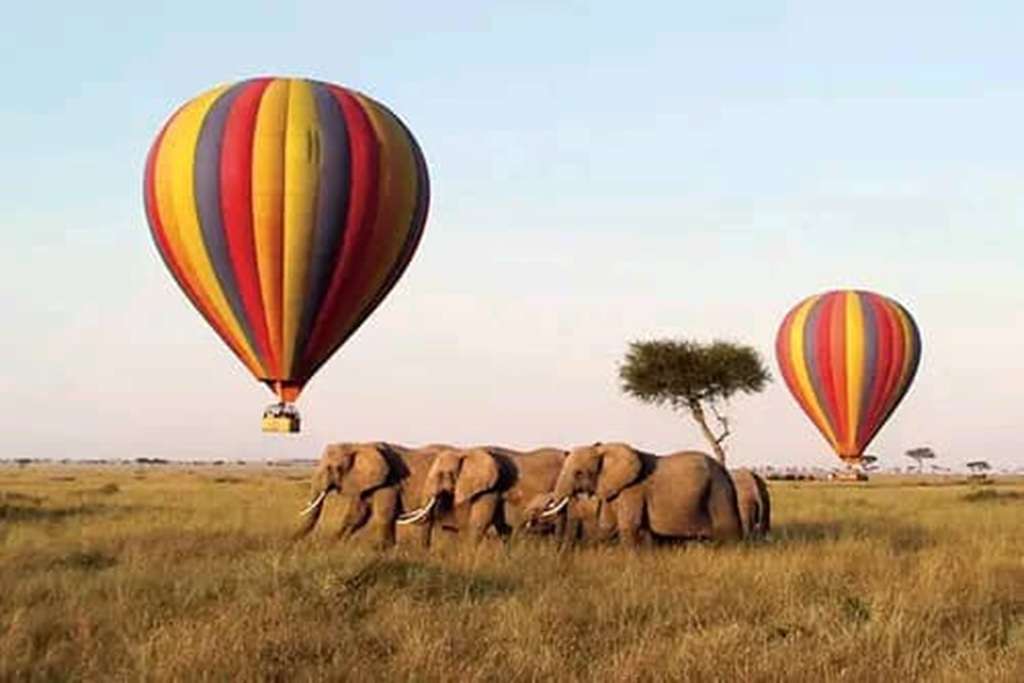
Imagine drifting silently above the African wilderness as the sun climbs over the Rwenzori Mountains, painting the savanna in shades of amber and gold. Below you, a herd of elephants moves through the morning mist, hippos wallow in the Kazinga Channel, and a pride of lions stirs in the long grass. This is not a dream — this is a balloon safari over Queen Elizabeth National Park, and it is one of the most extraordinary travel experiences Uganda has to offer.
What Is a Balloon Safari in Uganda?
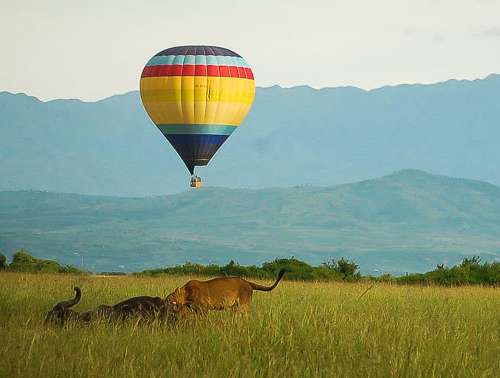
A hot air balloon safari is exactly what it sounds like: a guided flight aboard a hot air balloon over one of Uganda's most celebrated national parks. Unlike game drives, which are ground-level and often limited by thick vegetation and terrain, a balloon safari gives you a panoramic, bird's-eye perspective of the landscape and its wildlife. You float gently with the wind, engines quiet, with nothing between you and the vast Ugandan wilderness but open sky.
Queen Elizabeth National Park is the primary destination for balloon safaris in Uganda. Spanning over 1,978 square kilometres in western Uganda, the park is one of Africa's most biodiverse protected areas, home to over 600 bird species, forest elephants, hippos, lions, leopards, and the famous tree-climbing lions of Ishasha. From above, you can appreciate just how spectacular and diverse this ecosystem truly is.
What to Expect on Your Balloon Safari
The Launch at Sunrise
Every balloon safari begins before dawn. You will be collected from your lodge and driven to the launch site as darkness gives way to a soft pre-dawn glow. The experience begins even before you leave the ground — watching the balloon being inflated is a spectacle in itself, with the enormous envelope slowly filling against a sky fading from black to deep blue.
Flights typically launch at sunrise, around 6:30 to 7:00 AM. This timing is intentional. The morning air is calm, the temperatures are cool, and animals are most active during the early hours. The low-angle light of sunrise also makes for extraordinary photography, casting dramatic shadows and warm tones across the landscape.
In the Air
Once airborne, the balloon climbs steadily to a cruising altitude of between 300 and 1,000 feet, depending on wind conditions and what the pilot wants to showcase. Your experienced pilot will navigate toward wildlife concentrations, guiding the balloon over the Kazinga Channel — a 36-kilometre waterway connecting Lake George and Lake Edward — where hippos and crocodiles gather in remarkable numbers.
From this elevation, you can spot wildlife that would be nearly impossible to detect on a game drive: a leopard resting in the canopy of an acacia tree, a large python coiled in the grass, or a massive elephant herd moving in convoy across the open plains. The silence of balloon flight means animals are rarely disturbed, allowing you to observe completely natural behaviour undisturbed.
Flights typically last between 45 minutes and one hour, though the experience will feel both longer and shorter than that — time moves differently when you are floating above Africa.
The Landing and Champagne Celebration
When the pilot signals the descent, the balloon gently touches down on the open savanna. By long-standing balloon safari tradition, the flight is celebrated with a bush champagne breakfast. Seated in the wild, surrounded by the sights and sounds of the African bush, you toast to your flight and enjoy a full breakfast prepared in the field. It is a moment of pure magic.
Why Queen Elizabeth National Park Is Perfect for Balloon Safaris
Queen Elizabeth National Park offers terrain ideally suited to aerial exploration. The landscape is extraordinarily varied — open grassland, dense acacia woodland, volcanic crater lakes, wetlands, and the broad Kazinga Channel. From above, you can see how all these habitats connect and transition into one another, gaining an ecological understanding of the park that is simply not possible from the ground.
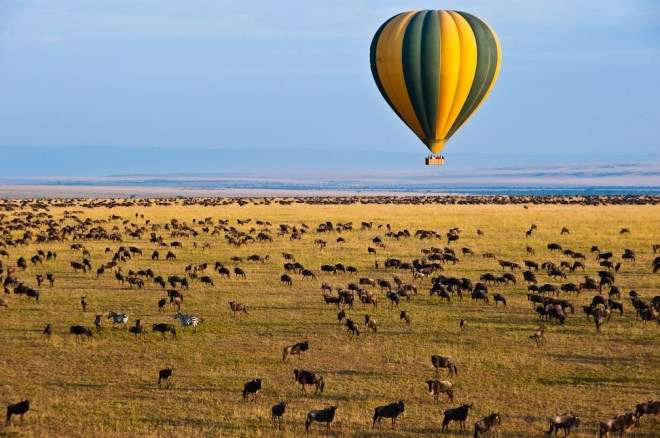
The park's population of Ugandan kob (a medium-sized antelope) is one of the largest in Africa, and their grazing herds are a breathtaking sight from altitude. The park also harbours large numbers of cape buffalo, waterbuck, warthog, and giant forest hog. If you are lucky, you may even spot one of the tree-climbing lions for which the Ishasha sector of the park is internationally famous.
For birdwatchers, a balloon safari is an unmissable opportunity. The park's 600-plus bird species include the African fish eagle, the marabou stork, the saddle-billed stork, shoebills in the wetlands, and hundreds of waterfowl along the Kazinga Channel. From the balloon, you fly at the level of the canopy and above, putting you eye-to-eye with species that spend their lives high in the trees.
Practical Information for Visitors
Best Time to Go: Balloon safaris operate year-round, but the dry seasons — from June to August and December to February — offer the clearest skies, the driest landscapes, and the best wildlife visibility. However, Uganda's lush green wet seasons have their own beauty when viewed from above.
How to Book: Balloon safari operators in Uganda require advance booking, often several weeks or months ahead during peak season. Your lodge or a reputable Uganda tour operator can arrange this as part of a broader safari package.
What to Wear: Dress in layers. Mornings at altitude can be cool, especially during the dry season. Neutral colours are traditional for safari, though in a balloon you are well above the ground so colour matters less than comfort.
Photography Tips: Bring your camera and a wide-angle lens. A zoom lens is also useful for capturing wildlife below. Stabilize yourself against the balloon basket for sharp shots as you descend toward wildlife.
Fitness and Health: Balloon safaris are low-impact and accessible to most travellers. You will need to be able to stand for the duration of the flight and climb in and out of the basket. Pregnant women and those with certain medical conditions should consult their doctor before booking.
Combining Your Balloon Safari with Wildlife safari Adventure
A balloon safari pairs beautifully with the many other extraordinary experiences Queen Elizabeth National Park has to offer. A Kazinga Channel boat cruise brings you close to hippos and crocodiles at water level — a dramatic contrast to the aerial perspective. A guided game drive through the Kasenyi plains at dusk offers the chance to spot lions on the hunt. And just a few hours' drive away, Bwindi Impenetrable Forest offers gorilla trekking, one of the most profound wildlife encounters on earth.
Uganda is one of Africa's most underrated safari destinations, offering incredible wildlife density, stunning landscapes, and a warmth of hospitality that keeps visitors coming back. A balloon safari over Queen Elizabeth National Park is the perfect way to begin or conclude your Ugandan adventure — rising above the pearl of Africa with the whole wild world spread out beneath you.
Ready to book your Uganda balloon safari? Explore our full guide to Queen Elizabeth National Park and Uganda safari packages at Uganda Tourist Guide. Have questions? Contact our team for expert travel advice tailored to your itinerary.
Tags: Uganda safari, balloon safari Uganda, Queen Elizabeth National Park, Uganda travel, wildlife Uganda, hot air balloon Africa, Uganda tourist guide, adventure travel Africa, Uganda wildlife, what to do in Uganda